 BIRDSings
Decoy speaker buyer's guide 2026: SPL, frequency response, weatherproofing
A 5-watt phone speaker will not move a duck at 60 metres. We break down the three specs that actually matter when you pick a field speaker and why they decide whether your calls reach the birds at all.
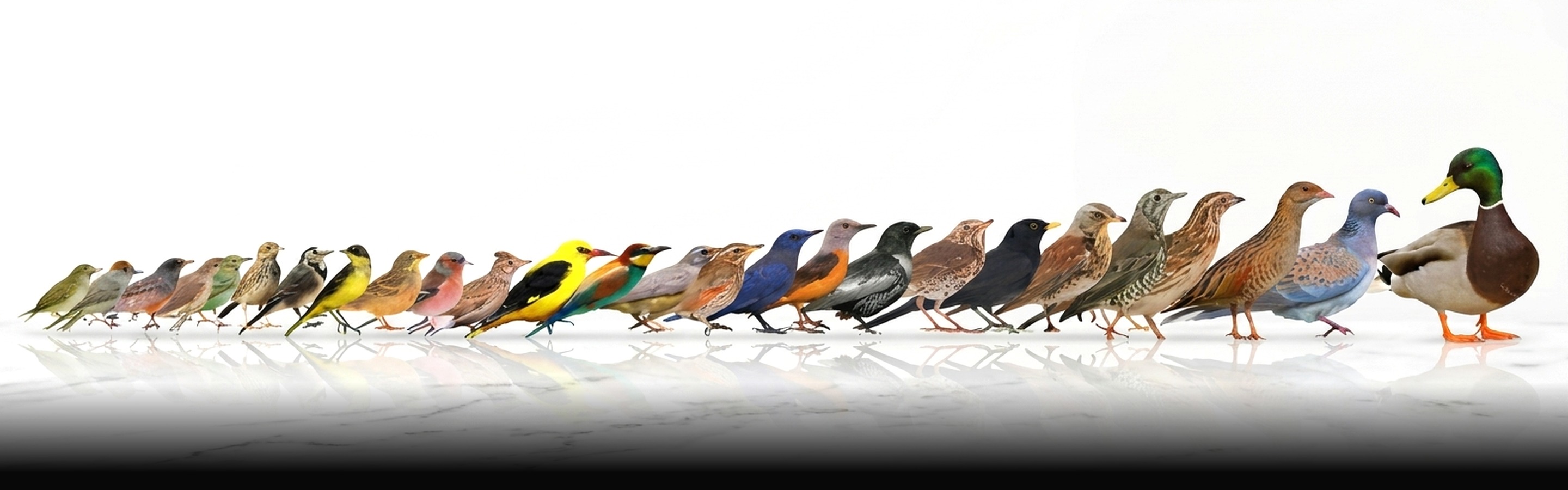
Every bird-call MP3 in the BirdSings catalog is mastered to MP3 320 kbps from a studio WAV. That leaves exactly one variable between the recording and the birds: the speaker in the field. Pick the wrong box and even a perfectly cadenced call reaches the ducks as a muddy honk they instinctively avoid.
Spec 1: SPL @ 1 m — what «loud enough» actually means
Sound Pressure Level (SPL) is measured in decibels at one metre from the speaker. A phone speaker peaks around 75–82 dB SPL. A decent portable Bluetooth field speaker sits at 90–100 dB. A purpose-built decoy speaker like an FoxPro-tier unit hits 115–125 dB. Sound falls off roughly 6 dB with every doubling of distance in open air, so a 100 dB speaker at 1 m is only about 74 dB at 32 m and 62 dB at 128 m — already below wind noise. If you plan to work rafts at 60 metres, budget for at least 110 dB SPL @ 1 m.
Spec 2: Frequency response — where your call actually lives
| Species | Fundamental (Hz) | Formants (Hz) |
|---|---|---|
| Mallard hen quack | 350–500 | 1.2k, 2.4k |
| Teal drake whistle | 2.8k–3.5k | — |
| Greylag goose honk | 250–600 | 1.5k, 3k |
| Song thrush | 1.5k–7k | varied |
| Goldfinch | 2k–8k | varied |
A speaker rated 150 Hz–15 kHz ±3 dB covers everything from a goose honk to a goldfinch trill. Cheap Bluetooth speakers roll off aggressively below 200 Hz — you lose the low rasp of a hen quack that ducks use for species recognition. Aggressive rolloff above 10 kHz kills passerine calls entirely.
Spec 3: Weatherproofing (IP rating)
IPX4 handles splashes — not real rain, not immersion. IP67 tolerates full immersion to 1 m for 30 minutes — the minimum sensible rating for waterfowl work. IP68 and MIL-STD-810G units survive a full day in a duck marsh without complaint. Do not confuse «water-resistant» marketing copy with IP-certified numbers.
Other specs to sanity-check
- Battery life at working volume. Manufacturers quote runtime at 50% volume, indoors. Halve their number for the field.
- File format support. Confirm the speaker's MP3 decoder handles 320 kbps CBR (constant bitrate). Some cheaper units silently downsample.
- Loop cleanliness. Test loop-repeat on a hen quack: any speaker that inserts a click or pop between loops will train the local ducks to flare at your spread within days.
- USB / SD card slot. A dedicated SD slot lets you bring 20+ species without pairing a phone in the cold. Card class 10 or higher, formatted FAT32.
- Remote range. 100 m open ground is realistic; brochure «200 m» assumes line-of-sight and a fresh battery.
Field test protocol
Before you buy, run this protocol on any candidate:
- Play a Mallard hen quack preview at moderate volume in an open field.
- Walk out to 40 metres. The individual quacks should still be clearly separable.
- Walk to 80 metres. You should still hear pitch modulation, not just a monotone honk.
- Cup your ear and turn slowly. If the sound «disappears» when you rotate 45°, the speaker's dispersion pattern is too narrow for spread work.
Recommended volume per species
Overloud calling flares birds long before they can decode the mistake. Field-tested working volumes at the speaker (measured with a phone SPL meter at 1 m):
- Mallard, teal, wigeon: 92–98 dB — slightly louder than nearby human conversation.
- Geese: 100–108 dB — big birds want big sound, but stay below distortion.
- Goldfinch, chaffinch, thrushes: 78–85 dB — anything louder immediately sounds wrong.
- Quail, partridge: 82–90 dB.
Species-page previews to test with
Every BirdSings species page ships with a 20-second preview. Use the Mallard, Greylag Goose, and Goldfinch previews as a low/mid/high-frequency stress test before you commit to a speaker.